

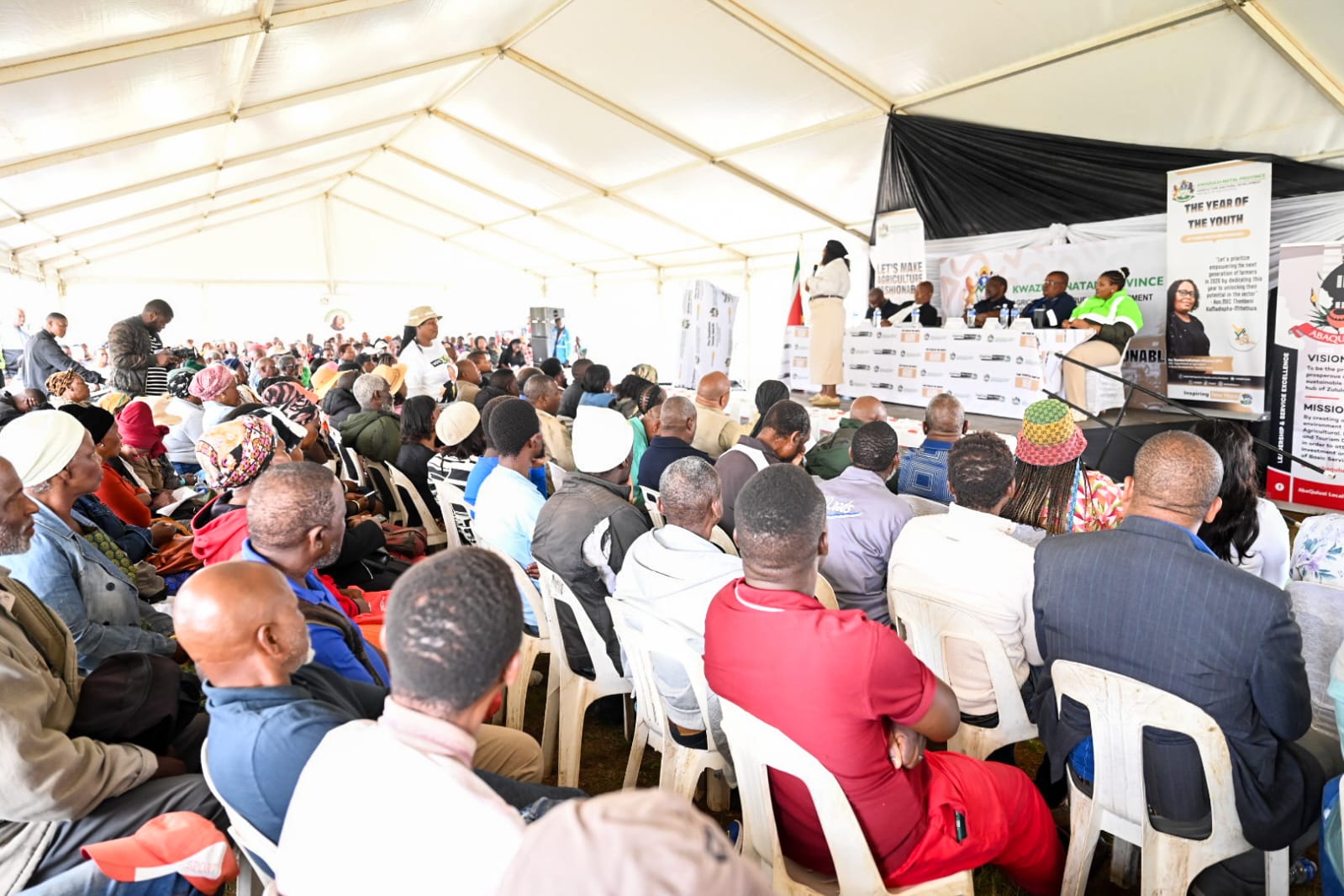
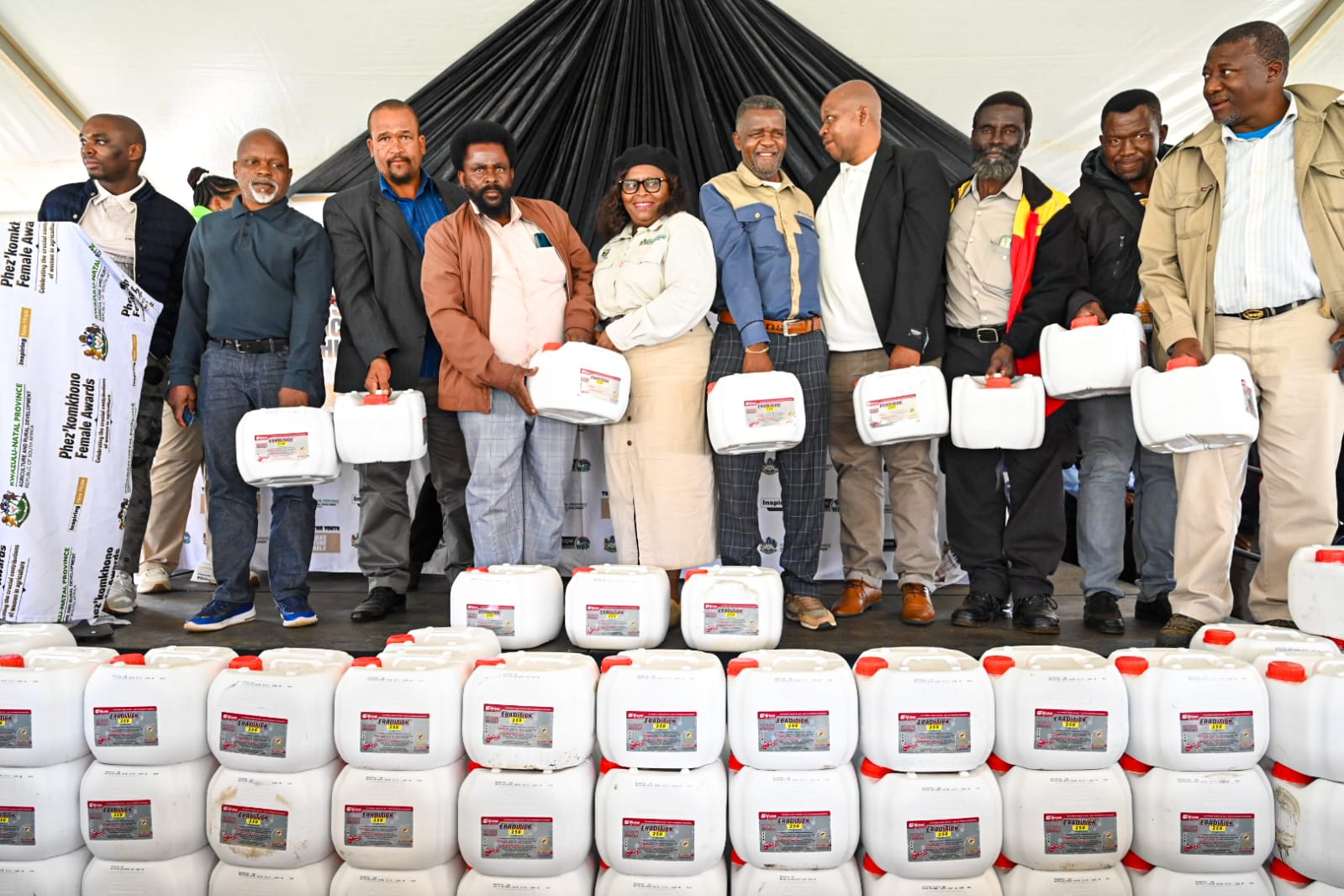
The KwaZulu-Natal MEC for Agriculture and Rural Development, Mrs Thembeni kaMadlopha-Mthethwa, handed over dipping chemicals to 126 diptanks under the AbaQulusi Livestock Association on Tuesday 20 October 2026 at oPhondwana Diptank, outside Vryheid.
The programme forms part of routine distribution to the Department's 2 238 dip tank facilities province-wide.
According to the Department's Veterinary Services, dipping is critical for controlling ticks that cause tick-borne diseases such as red water, gall sickness and heartwater.
Farmers are advised that cattle should be dipped every 14 days (fortnightly) in inland areas and every 7 days (weekly) in coastal districts during summer. During winter, dipping should be done every 28 days (monthly) for inland areas and every 14 days in coastal areas.
In addition to the acaricides (dipping chemicals), the MEC donated a bull to the Association to improve livestock genetics in the area.
Speaking during the handover, MEC kaMadlopha-Mthethwa said: "Healthy animals mean healthy livelihoods. If we do not dip, we lose our cattle to ticks that causes tick-borne diseases and our farmers lose their income."
In a bid to improve the quality of the herd and good genetics in the area, the MEC also donated a bull to the AbaQulusi Livestock Association.
"The donation of this bull will help our farmers improve their breeding stock, so that they produce better calves that can fetch better prices at market and keep diseases at bay. We don't just want many cattle, we want quality cattle," said MEC kaMadlopha-Mthethwa.
As part of bringing services closer to the people, the Department also deployed its yellow plant machinery to clear and rehabilitate the access route to oPhondwana Diptank, which is now accessible by car and truck for the first time in years.








 Anonymous National Anti-corruption Hotline: 0800 701 701